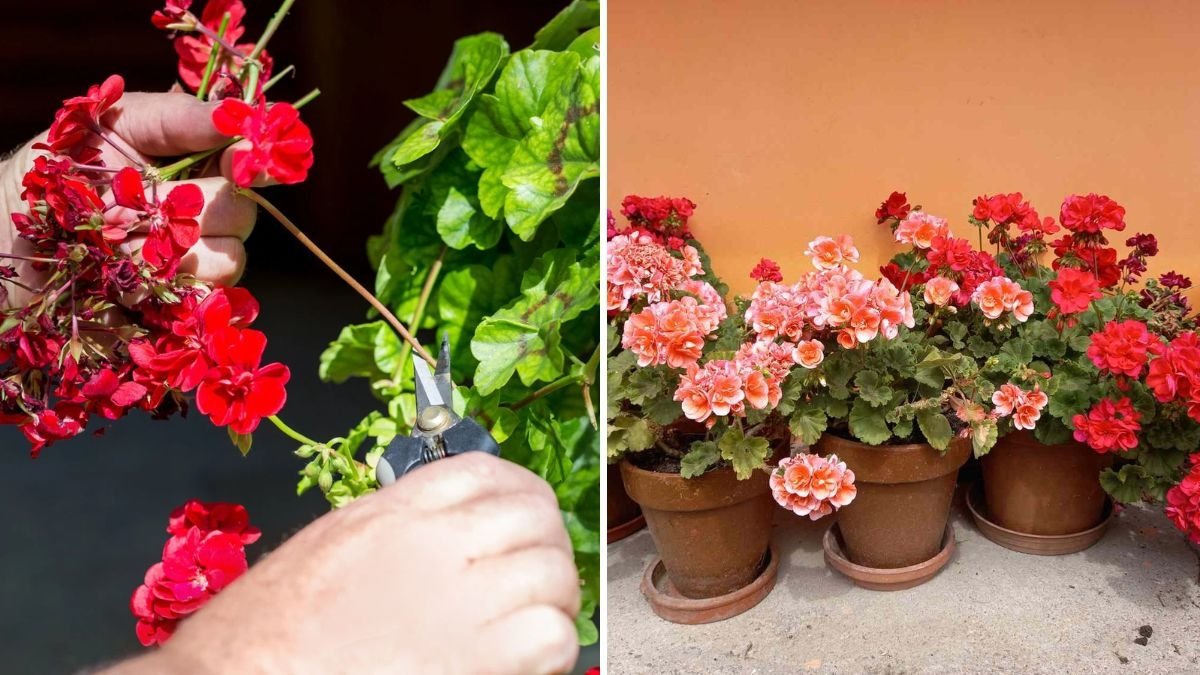
Geraniums are one of the most versatile and long-lasting flowering plants in gardens, balconies, and patios. Known for their bright blooms, aromatic foliage, and adaptability, geraniums can provide continuous color well into fall—if pruned and cared for properly. Pruning isn’t just a cosmetic task; it’s essential for stimulating new growth, extending flowering, and preparing plants for cooler months.
In this guide, we’ll explore how to prune geraniums effectively, including timing, techniques, seasonal care, and tips to help your plants thrive until the first frost.
Why Pruning Geraniums Matters
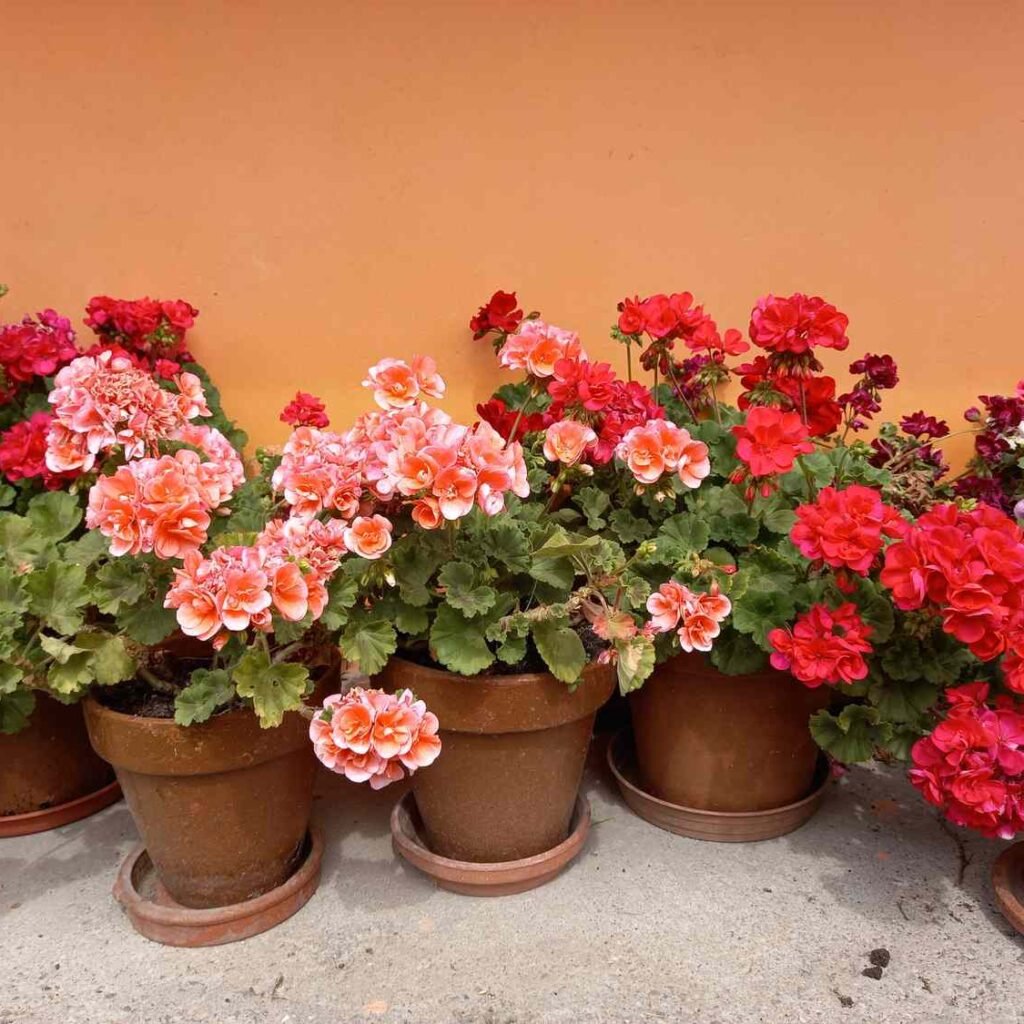
Pruning geraniums offers several key benefits:
- Encourages Continuous Blooming – Removing spent flowers and leggy stems redirects energy to new flower production.
- Promotes Healthy Growth – Eliminates weak or damaged stems, reducing disease risk and encouraging bushier plants.
- Improves Airflow – Reduces the likelihood of fungal diseases by preventing overcrowding.
- Prepares for Fall – Helps the plant withstand cooler temperatures and maintain vigor longer.
Without proper pruning, geraniums can become leggy, sparse, and less productive, especially as fall approaches.
Understanding Geranium Growth Patterns
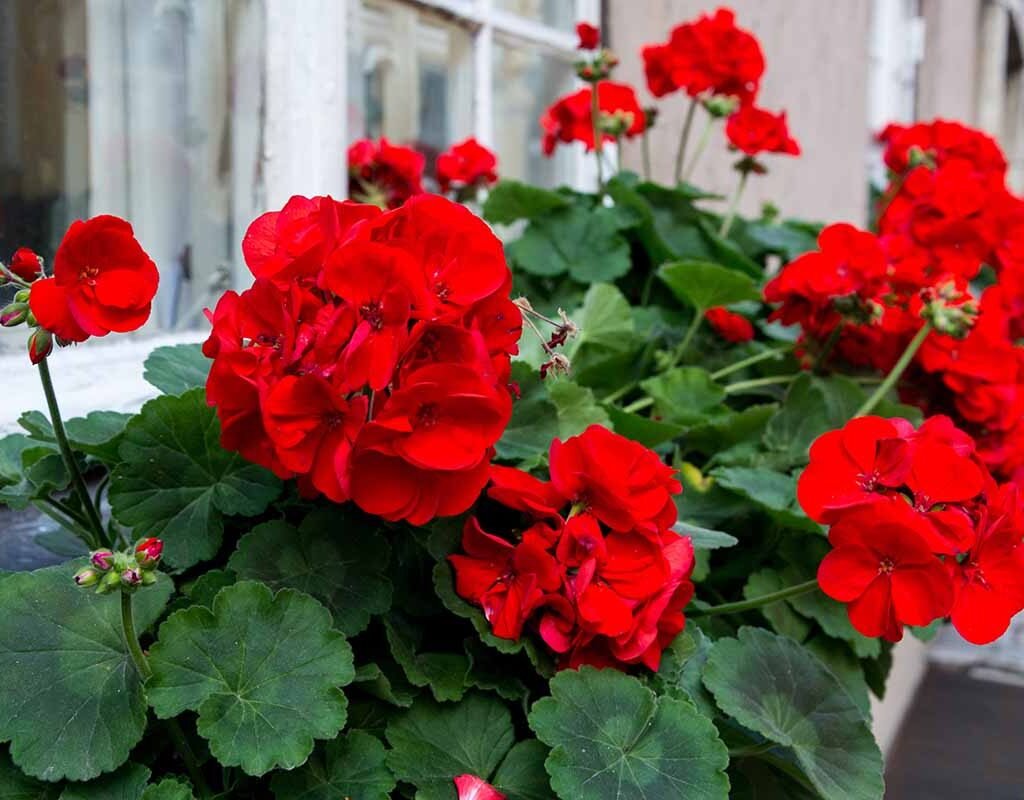
Geraniums, particularly the popular Pelargonium varieties, have distinct growth habits that affect pruning:
- Bush-type Geraniums: Naturally compact; pruning encourages fuller growth and more blooms.
- Trailing or Ivy-leaf Geraniums: Grow long stems; pruning prevents them from becoming straggly and encourages side shoots.
- Zonal Geraniums: Produce large clusters of flowers; regular deadheading ensures continuous blooming.
Expert Tip: Knowing your geranium type helps determine how much and how often to prune.
Step 1: Timing Your Pruning
Proper timing ensures maximum flowering and plant health:
Spring and Summer Pruning
- Frequency: Every 4–6 weeks during the active growing season.
- Purpose: Remove spent blooms (deadheading) and cut back leggy stems to encourage bushy growth.
- Method: Cut just above a leaf node or lateral bud to stimulate new flowering stems.
Late Summer / Early Fall Pruning
- Goal: Prepare the plant for cooler temperatures and maintain flowering until frost.
- Method: Trim approximately one-third of the plant, focusing on leggy, weak, or overgrown stems.
- Timing: Perform pruning in late August or early September, depending on your local climate.
Expert Insight: Avoid heavy pruning too late in fall, as tender new growth may be damaged by frost.
Step 2: Deadheading for Continuous Blooms
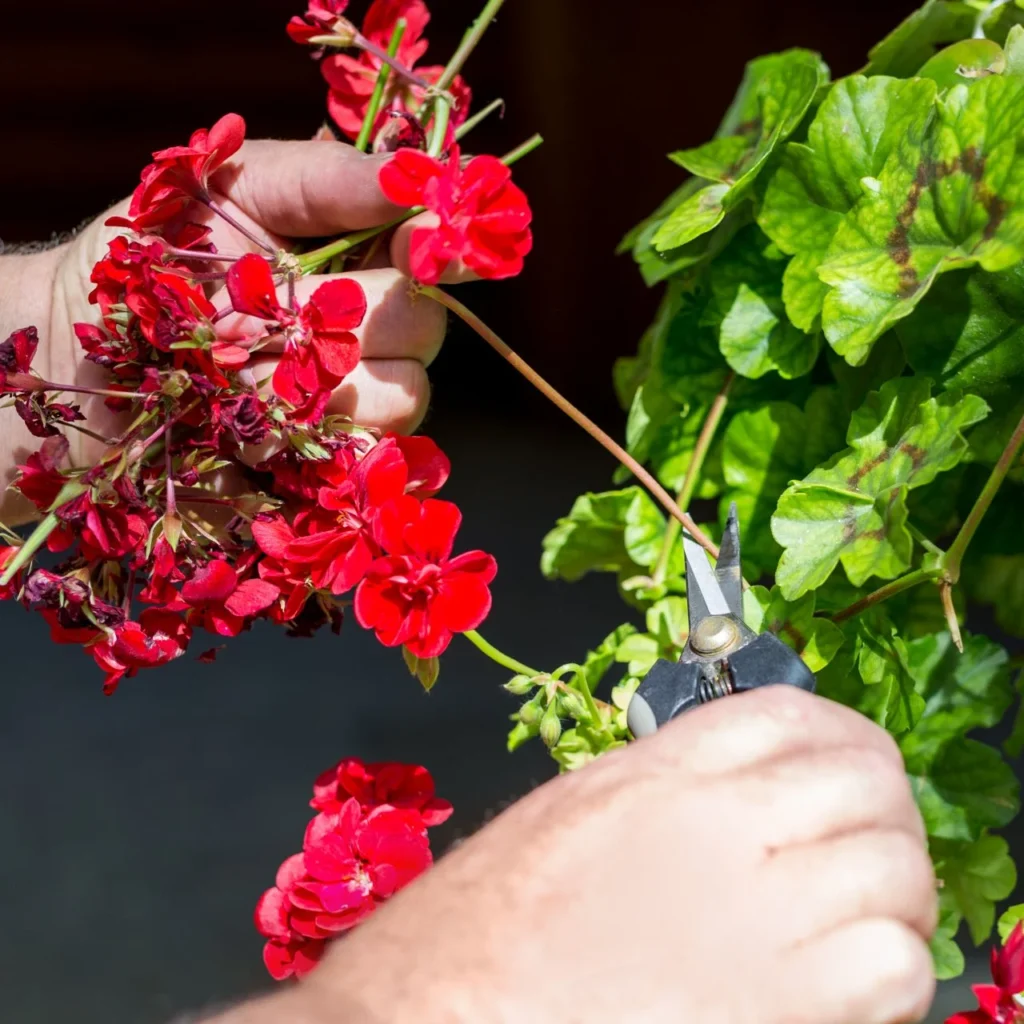
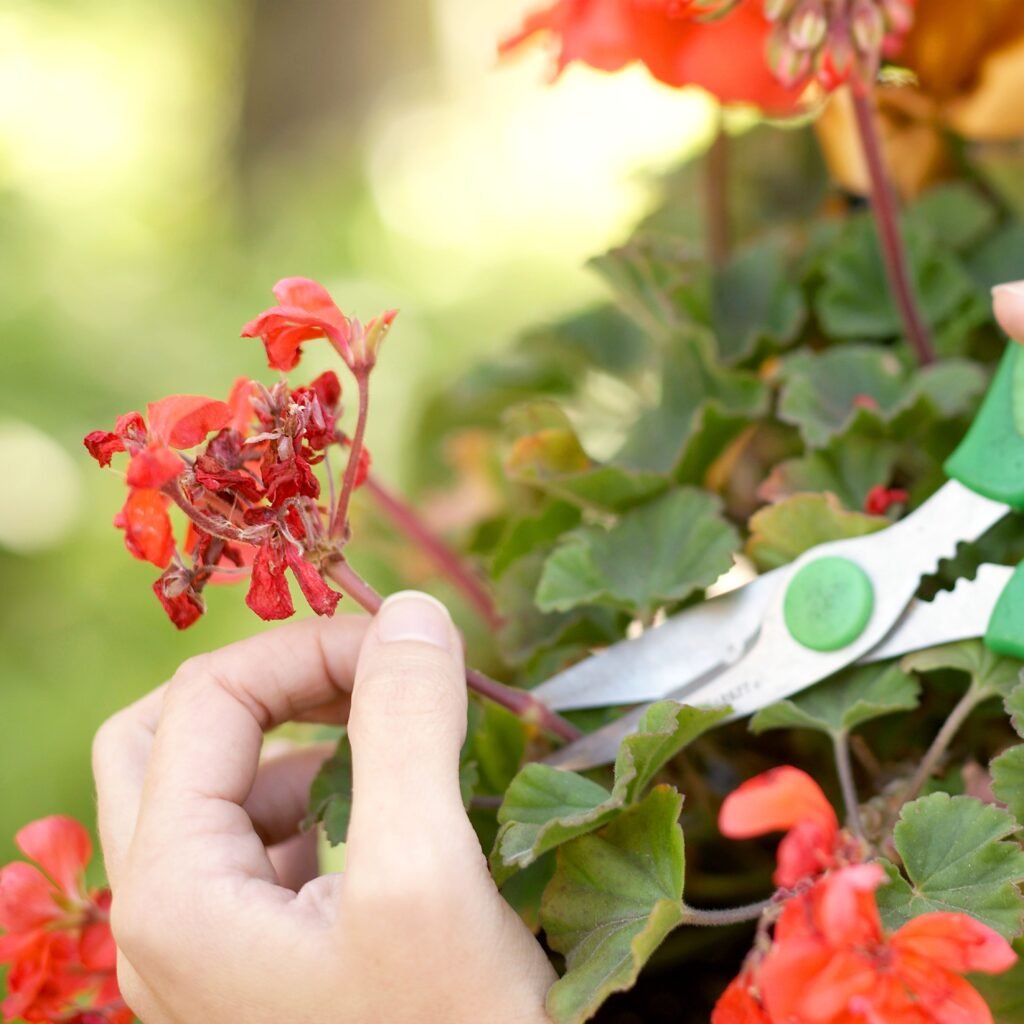
Deadheading is the practice of removing spent flowers and is critical for extending the blooming season:
- Identify Spent Flowers: Flowers that are wilted, discolored, or browning.
- Cut Properly: Snip the flower stem down to the first set of healthy leaves or a lateral bud.
- Benefits: Promotes new flowers, prevents seed formation, and maintains a tidy appearance.
Tip: Check geraniums at least once a week during the flowering season for optimal results.
Step 3: Cutting Back Leggy Stems
Geraniums naturally develop long, leggy stems, especially if they’re in partial shade or crowded conditions:
- Select Stems: Identify stems that are weak, overgrown, or bare at the bottom.
- Prune Technique: Cut back one-third to one-half of the stem to a healthy leaf node.
- Encourages: Side shoots, stronger stems, and more flowers.
Expert Insight: Bushier geraniums not only look better but are also more resilient to pests and diseases.
Step 4: Tools and Techniques
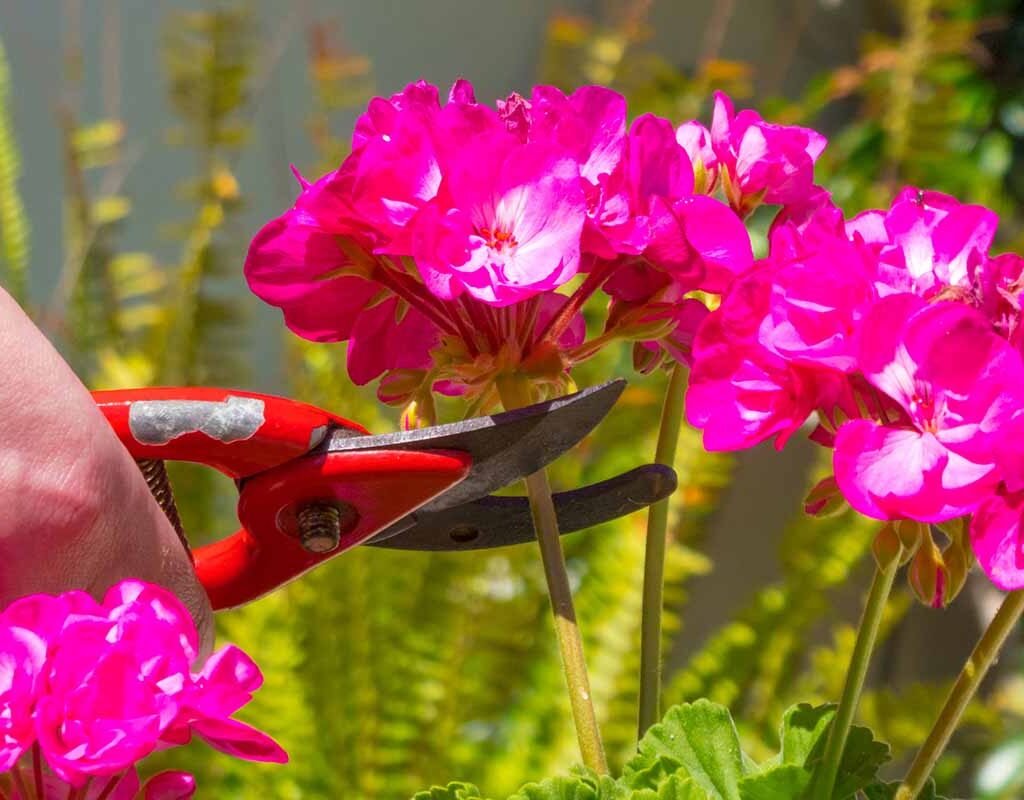
Using the right tools ensures clean cuts and reduces stress on the plant:
- Sharp Pruners or Scissors: Avoid crushing stems.
- Clean Cuts: Make cuts at a slight angle to prevent water pooling and reduce rot risk.
- Disinfect Tools: Sterilize between plants to prevent disease transmission.
- Protective Gear: Gloves protect hands from sap irritation, especially for large or thorny varieties.
Tip: Use precise cuts rather than tearing stems, which can damage the plant and reduce reblooming.
Step 5: Post-Pruning Care
After pruning, proper care ensures geraniums continue to thrive through fall:
- Fertilization: Apply a balanced, slow-release fertilizer or liquid bloom fertilizer every 4–6 weeks.
- Watering: Keep soil evenly moist but avoid waterlogging; geraniums prefer slightly dry conditions between waterings.
- Sunlight: Ensure plants receive 6–8 hours of sunlight daily for maximum blooms and strong stems.
- Pest Monitoring: Watch for aphids, spider mites, and whiteflies, which can weaken plants during the cooler months.
Expert Insight: Healthy plants respond better to pruning and continue producing flowers longer.
Step 6: Preparing Geraniums for Winter
Geraniums are sensitive to frost. Preparing them properly ensures they survive and bloom next season:
- Indoor Overwintering: Move potted geraniums indoors to a bright, cool location before the first frost.
- Cut Back: Trim plants to 6–8 inches to reduce stress and encourage new growth indoors.
- Reduce Fertilization: Slow feeding during dormancy prevents excessive, tender growth.
- Check for Pests: Inspect leaves and stems before bringing plants inside to prevent infestations.
Tip: Some gardeners take cuttings in late fall to propagate new plants for spring planting.
Common Mistakes to Avoid
- Over-Pruning Too Late: Can remove stems that would otherwise support fall blooms.
- Neglecting Deadheading: Reduces flower production and leads to messy plants.
- Cutting Into Woody Stems: Older woody stems may not produce new shoots.
- Overwatering After Pruning: Increases risk of root rot and fungal disease.
- Insufficient Sunlight: Shaded plants become leggy and flower less frequently.
Tips for Extended Bloom and Plant Longevity
- Regular Maintenance: Deadhead and trim leggy stems consistently for continuous flowering.
- Balanced Fertilizer: Use fertilizers that support flower production rather than just leafy growth.
- Optimal Light: Full sun exposure encourages robust growth and stronger stems.
- Container Care: Geraniums in pots may need more frequent pruning and watering than those in the ground.
- Rotate Plants: If growing multiple varieties, stagger pruning to maintain garden color.
Conclusion
Pruning geraniums correctly is essential to enjoy vibrant flowers well into fall. By combining regular deadheading, selective stem trimming, and seasonal cutbacks, gardeners can maintain strong, healthy plants with continuous blooms.
- During summer: Deadhead spent flowers and cut back leggy stems to encourage bushy growth.
- Late summer: Perform a rejuvenation pruning of one-third of the plant to stimulate fall blooms.
- Fall preparation: Trim and prepare plants for indoor overwintering or winter dormancy.
With proper pruning, watering, fertilization, and pest management, geraniums remain strong, resilient, and flowering beautifully until the first frost, ensuring your garden, balcony, or patio stays colorful and vibrant well into the cooler months.

Leave A Comment