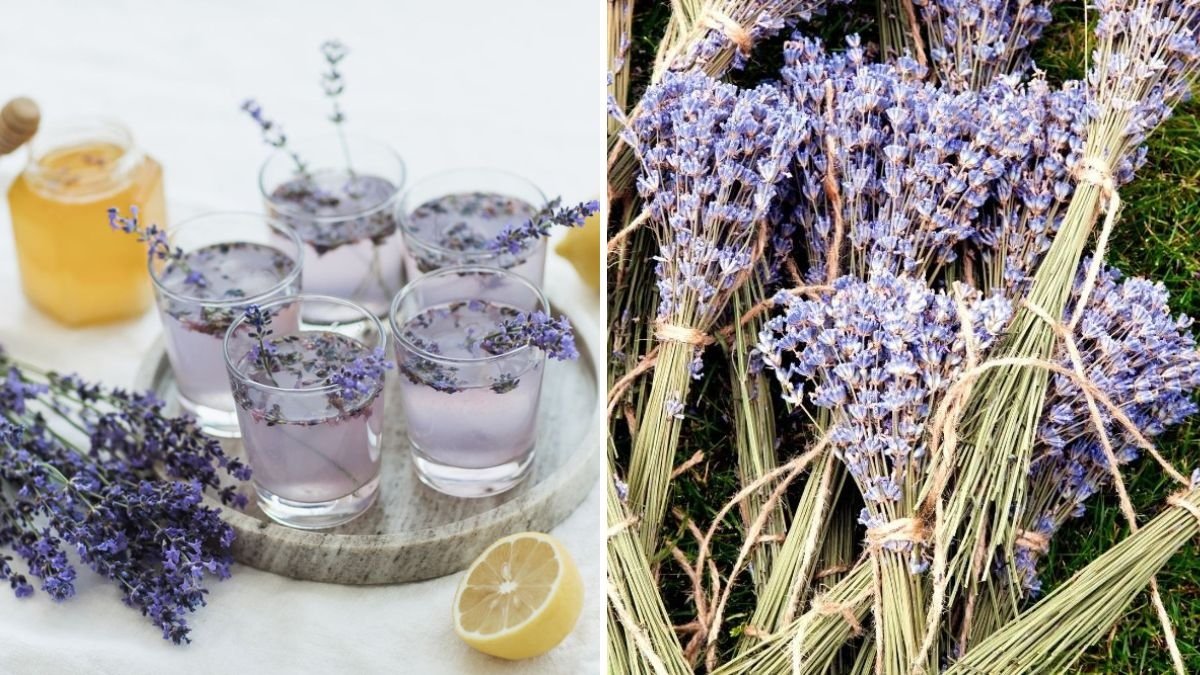
Lavender is celebrated worldwide for its fragrant flowers, calming properties, and versatile uses. From essential oils and herbal teas to wreaths, sachets, and dried floral crafts, lavender offers both beauty and practicality. However, harvesting lavender at the right time and using proper techniques is crucial for maximizing fragrance, flavor, and shelf life. Mistimed or improper harvesting can result in reduced oil content, weak flavor in teas, or brittle stems unsuitable for crafts.
In this guide, we explore how to harvest lavender correctly, including timing, techniques, processing, and storage tips to ensure your lavender remains potent, fragrant, and versatile for all your projects.
Understanding Lavender Varieties
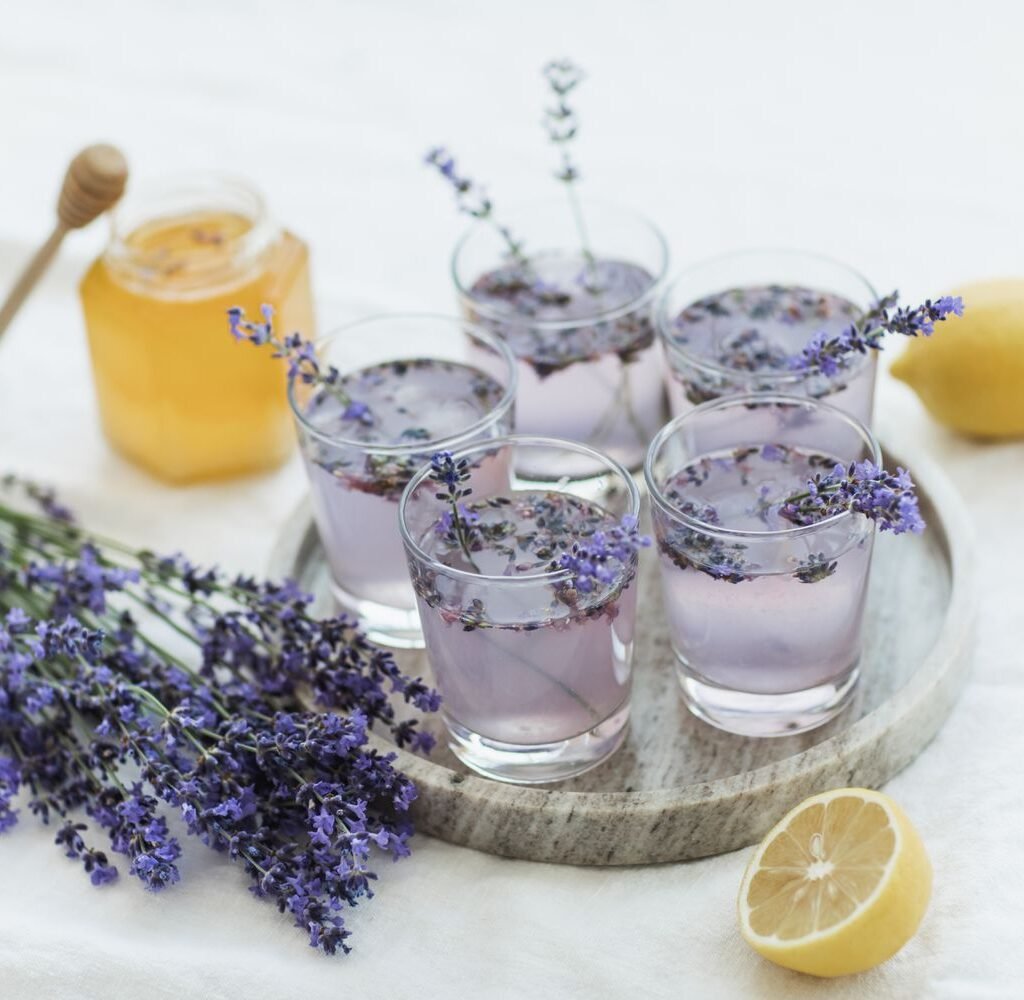
Different lavender varieties have unique characteristics that influence harvesting:
- English Lavender (Lavandula angustifolia) – Most common for essential oils, culinary use, and crafts. Fragrant and hardy in temperate climates.
- French Lavender (Lavandula dentata) – Known for decorative foliage and flowers; less fragrant than English lavender.
- Spanish Lavender (Lavandula stoechas) – Unique pineapple-shaped blooms; used primarily for ornamental purposes and some crafts.
Expert Tip: Choose a variety that suits your intended use—English lavender is ideal for oils and teas, while French and Spanish lavender excel in ornamental and craft applications.
When to Harvest Lavender
Timing is critical for optimal fragrance, flavor, and potency:
- Essential Oils – Harvest when 50–75% of the flower buds have opened. Peak oil content occurs just before full bloom.
- Teas – Harvest just as buds begin to open; avoid fully bloomed flowers, which may taste bitter.
- Crafts – Harvest when flowers are vibrant but not fully open to retain color and structure in dried arrangements.
Seasonal Timing:
- In temperate climates, lavender blooms from late spring to mid-summer.
- Harvest in the morning after dew evaporates for maximum essential oils and moisture-free flowers.
Step 1: Preparing for Harvest
Proper preparation ensures clean, high-quality lavender:
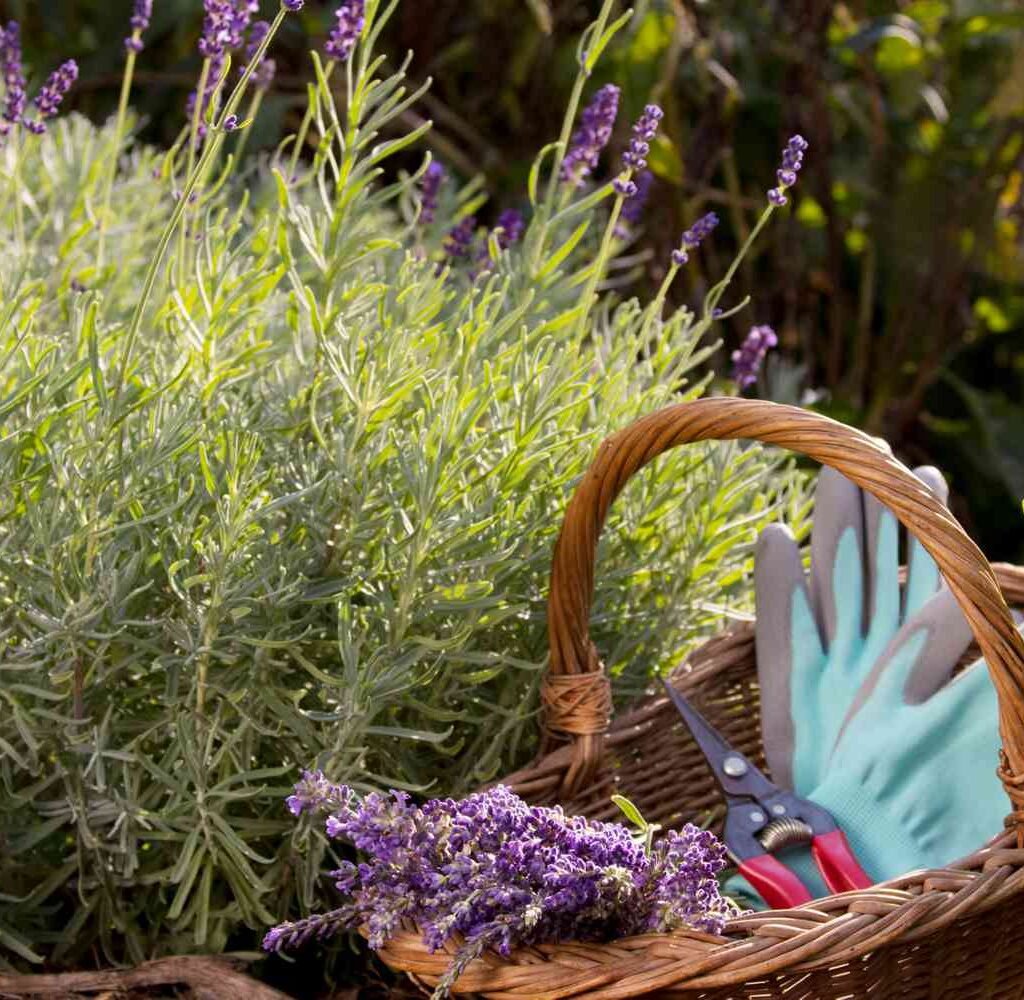
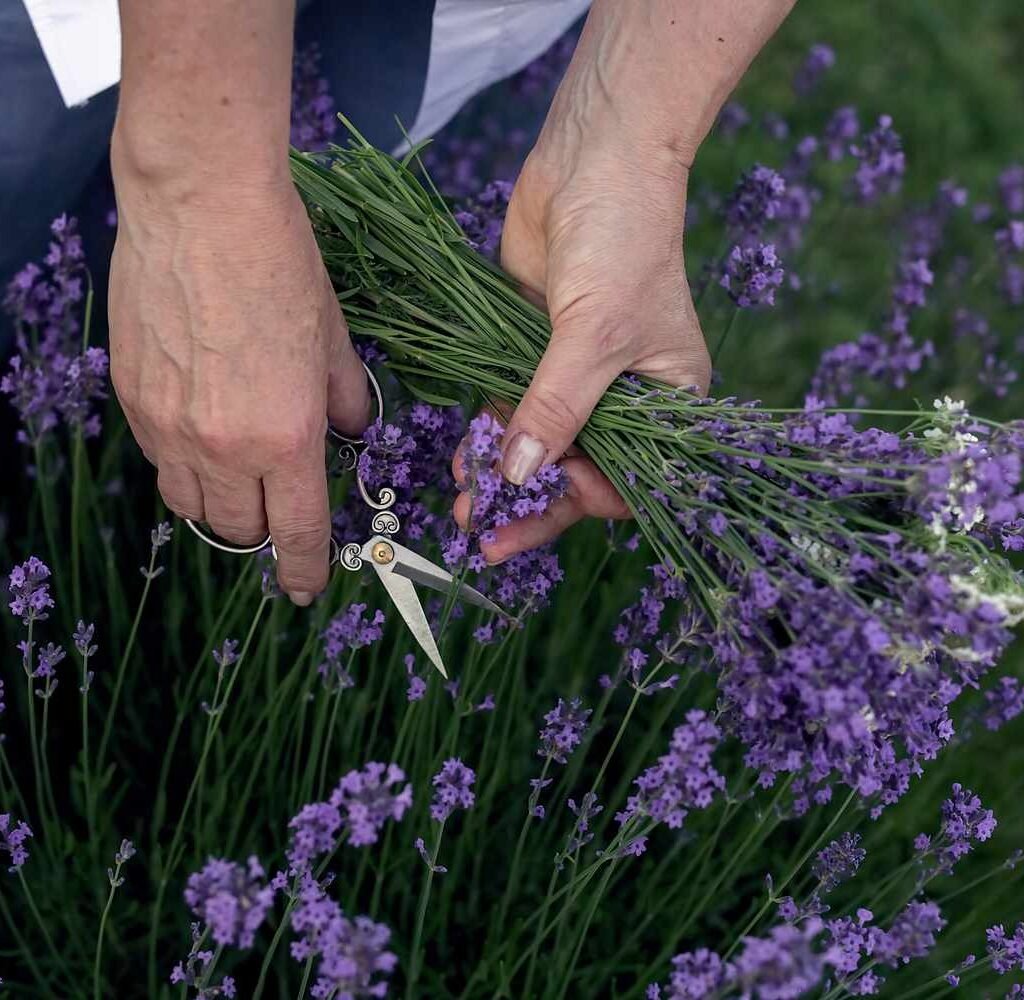
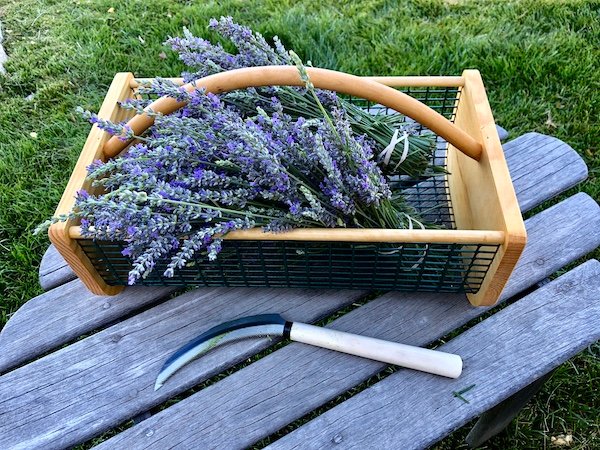
- Tools Needed: Sharp garden scissors, pruners, or shears.
- Containers: Baskets or trays for gentle collection; avoid plastic bags, which trap moisture.
- Protect Yourself: Long sleeves and gloves help prevent irritation from foliage.
Expert Tip: Sterilize tools before cutting to prevent contamination and preserve fragrance quality.
Step 2: Cutting Lavender Correctly
Correct cutting techniques preserve plant health and maximize flower quality:
- Where to Cut: Trim stems about 1–2 inches above the woody base. Avoid cutting into old, woody growth as it may not regrow.
- Stem Length: For essential oils, leave longer stems for easier handling. For teas and crafts, stems can be 6–12 inches.
- Angle: Make cuts at a slight angle to facilitate water runoff and reduce rot risk.
Expert Insight: Regular harvesting encourages the plant to produce more flowers throughout the season and prevents overgrowth.
Step 3: Processing Lavender for Different Uses
A. Essential Oils
- Distillation Method: Freshly cut stems can be distilled immediately to extract oils.
- Drying First: Some prefer air-drying stems for 24–48 hours to concentrate fragrance.
- Storage: Store oils in dark, airtight glass bottles away from sunlight to preserve potency.
Tip: Harvesting in the morning preserves more volatile oils compared to late afternoon cutting.
B. Teas
- Drying: Hang stems upside down in a cool, dark, and well-ventilated area.
- Duration: Allow 2–4 weeks for complete drying; flowers should crumble easily between fingers.
- Storage: Store dried buds in airtight containers for up to a year.
Tip: Only use fragrant, undamaged flowers for teas to ensure flavor and safety.
C. Crafts
- Wreaths and Bouquets: Cut longer stems (10–12 inches). Remove lower leaves for cleaner arrangements.
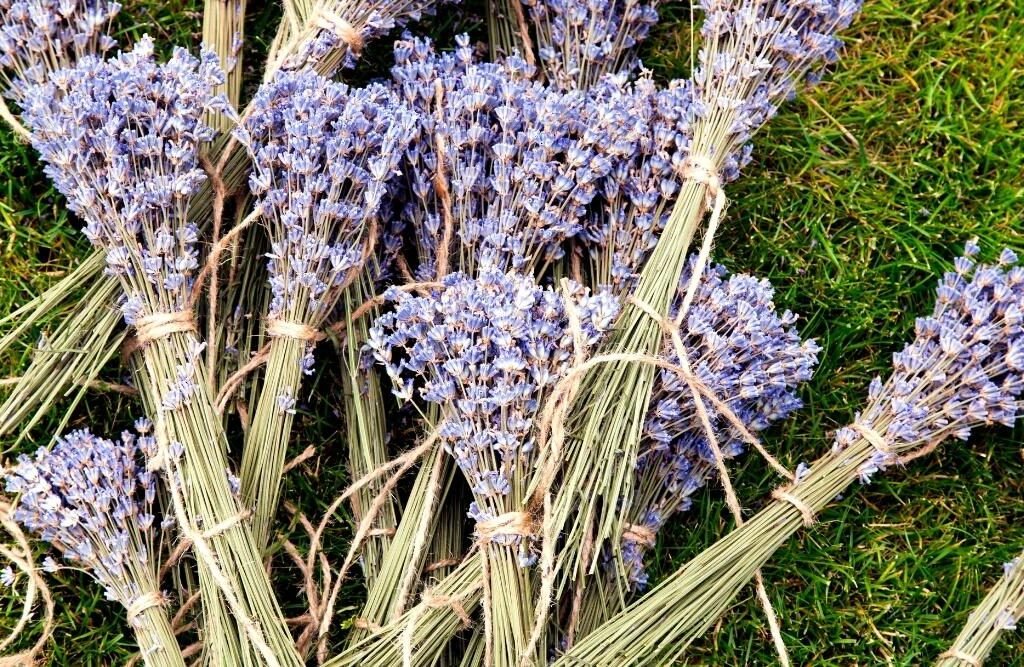
- Drying Method: Hang in small bundles in a dark, dry, and ventilated area to retain color.
- Preservation: Add a light mist of hairspray or floral sealant for longer-lasting crafts.
Expert Insight: Harvest slightly before full bloom to prevent color fading and brittle stems during drying.
Step 4: Post-Harvest Care
- Avoid Moisture: Wet flowers can develop mold and reduce fragrance.
- Air Circulation: Ensure good airflow around drying bundles.
- Check Regularly: Inspect for insects or decay during drying.
Tip: For essential oils, processing should ideally occur within 24 hours of harvesting to maintain maximum oil content.
Tips for Extending Lavender Productivity
- Regular Pruning – Trim after the first harvest to encourage a second bloom in late summer or early fall.
- Fertilization – Light feeding with balanced or low-nitrogen fertilizer supports healthy stems and blooms.
- Water Management – Lavender prefers slightly dry soil; overwatering reduces oil concentration and weakens stems.
- Sunlight – Full sun exposure (6–8 hours/day) ensures strong, fragrant flowers.
- Pest Management – Protect from aphids and fungal infections to maintain flower quality.
Common Harvesting Mistakes to Avoid
- Harvesting Too Early or Late – Early buds may lack fragrance; fully open blooms lose essential oils and color.
- Cutting Into Old Wood – Can damage the plant and reduce future flowering.
- Improper Drying – Hanging bundles in direct sunlight can bleach colors and reduce scent.
- Overcrowding Stems – Bundles that are too thick restrict airflow and promote mold.
- Using Dull Tools – Can crush stems and damage buds, reducing oil yield and aesthetic appeal.
Conclusion
Harvesting lavender correctly is both an art and a science. Whether your goal is essential oils, herbal teas, or decorative crafts, timing, technique, and post-harvest processing determine the quality and longevity of your flowers.
- For oils: Harvest when 50–75% of buds have opened, ideally in the morning.
- For teas: Use partially opened flowers for maximum flavor.
- For crafts: Cut slightly before full bloom to retain color and structural integrity.
By following these guidelines—selecting the right variety, cutting stems properly, drying under optimal conditions, and caring for plants post-harvest—you can ensure your lavender remains fragrant, flavorful, and visually stunning throughout the year.
With proper care, a single lavender plant can produce multiple harvests, enriching your garden and providing a sustainable source of flowers for culinary, therapeutic, and creative projects.

Leave A Comment